JOHN MORAN
Composer • Theater-Artist
2026 • THE REVELATION
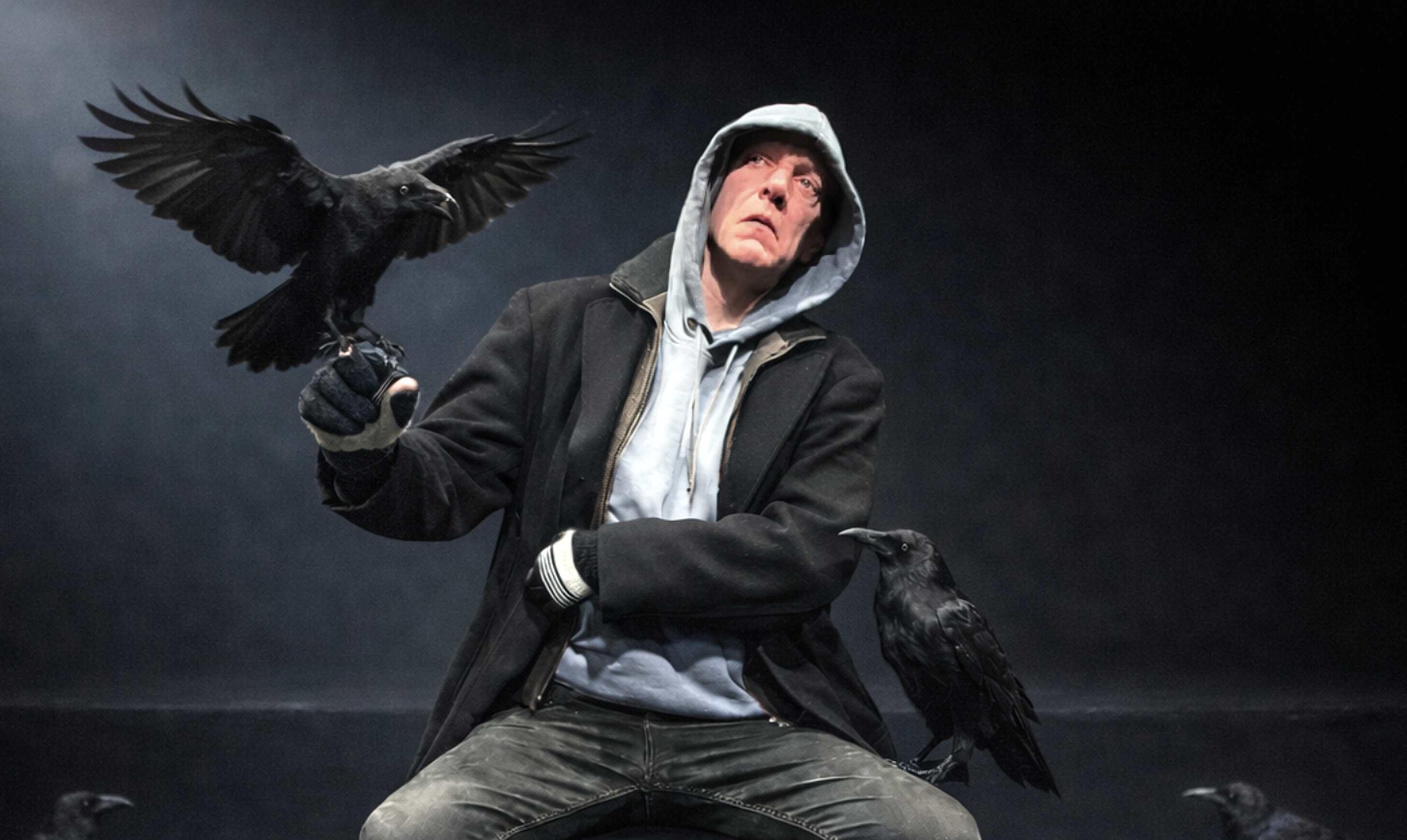
The Revelation is a 53-minute music theatre work for two performers created by composer and theatre artist John Moran in collaboration with Athens-based performer Vicky Filippa. Using Moran’s distinctive compositional language—constructed from precisely edited sounds, vocal recordings, and tightly choreographed gesture—the work unfolds through cinematic-style storytelling without the use of video, emphasizing the expressive potential of live performance and imaginative staging.
The piece presents an intimate portrait of the composer and his partner as their sense of reality begins to shift under the pressure of contemporary anxieties. Surrounded by signals of instability—war, social fragmentation, AI, and the lingering isolation of the post-pandemic world—the couple struggles to maintain a sense of normalcy while the world around them appears to be unraveling.Premiered in Dresden and Leipzig in 2026, The Revelation was designed as a touring work for two performers, allowing flexible presentation in both theatre and festival contexts. Presenters can request a full documentation of the piece along with a technical-rider by contacting us at the link below.
SELECTED ARCHIVE
2024 • Für Joseph - ein Film
A feature-length film following performer Joseph Keckler through a surreal encounter with composer John Moran in Dresden. A playful homage to 1940s Hollywood musicals, the work explores Moran’s compositional language through gesture and recorded speech. Winner of Composer of The Future, San Francisco International Film Awards.
2019 • everyone
Created for 3 dancers and 2 musicians, everyone transforms everyday gestures into structured compositions through precisely synchronized movement and recorded sound. Structured as a fugue, the work traces shared rhythms of life through repetition and variation.
2012-2017 • Etudes: Amsterdam
A solo performance work developed during Moran’s European period, combining recorded voice, a detailed recorded soundtrack and precise physical gesture into a series of tightly structured studies exploring memory, repetition, and perception. The award-winning piece was widely performed throughout the United Kingdom and Europe over 5 years.
2005-2011 • John Moran and his neighbor, Saori
A long-term collaboration with dancer Saori Tsukada, this strange and impossible to describe vareité-style performance had immense impact over 6 years of international touring. In 2008 The New York Times described the performances as "One of the most important and innovative collaborations in New York City." TimeOut NY wrote in this period, "With a one-hour peformance, Moran has reaffirmed his reputation as one of the most important (and underrated) figures in the avant-garde." The Guardian UK wrote of the duo, "There is nothing else like John Moran and Saori Tsukada in London. Probably not in the entire world."
Continue:
ARCHIVE II
2000 • Book of the Dead (2nd Ave.)
A large-scale music theatre work set within a fragmented urban landscape and explores the themes of mortality, memory, and contemporary city life. Drawing on references to the Egyptian and Tibetan Books of the Dead, the work frames these ideas within a modern context. Commissioned by Lincoln Center for the Peforming Arts (New York) the production featured narration by actress Uma Thurman. Moran's design and stage-craft for the work received the Henry Hewes Design Award for Best Stage Design of New York City (2000).
1997 • Mathew in the School of Life
A music theatre work exploring childhood perception and memory through cyclical structures and carefully constructed performance sequences. The production featured performances by poet Allen Ginsberg and actress Julia Stiles and the composer in a starring role. As a performer, The New York Times compared Moran to figures like Merce Cunningham, Mark Morris and Twyla Tharp.
1994 • Everyday, Newt Burman
Moran’s Everyday, Newt Burman (The Trilogy of Cyclic Existence) marked an important step in the development of his music-theatre practice, moving fluidly between theatrical forms. Widely noted within New York’s experimental theatre scene, it contributed to a broader shift toward hybrid performance forms in the 1990s. Featuring performers James Godwin, Rebecca Moore and Mimi Goese and presented by Ridge Theater, The New York Times described the work as "Phenomenally imaginative music-theater." The work was remounted numerous times in New York City between 1994-98, as well as at Staatstheater Darmstadt (Germany) in 2001.
1990 - The Manson Family (Opera)
Originally produced in New York by Lincoln Center for the Performing Arts and starring Iggy Pop, this work became a major cultural event within the downtown scene. Later cited by Rolling Stone as one of Iggy Pop’s most significant collaborations, it established Moran’s distinctive music-theatre language and remains one of his most influential works. The New York Times wroteof the work, "John Moran remains one of the leading figures in American music-theater." A recording of the work, produced by composer Philip Glass, recieved the country's first Parental Advisory label along with Public Enemy the same year, and was almost immediately banned by most commercial music retailers. An interesting trivia, Charles Manson himself wrote a letter to the music-critic of The Wall Street Journal upon its release, criticizing the author for his poor review, with the notable quote, "Moran is leveling the moon-karma over your cities at night."The opera has enjoyed a long life of reproductions since it's first premiere in 1990, including a remount directed by Moran in Dresden and Leipzig in 2017, an environmental production reimagined by director Troy Heard at Las Vegas' Majestic Repertory Theater and a ballet-version presented at Ooppera Skaala in Helsinki, Finland in 2006 choreographed by Thomas Freundlich.
1989 - Jack Benny!
Moran’s first opera, Jack Benny! premiered at La MaMa Experimental Theatre Club in New York and immediately established him as a distinctive new voice within the downtown performance scene. Constructed entirely from fragments of recorded television sound from the Jack Benny Program television-series of the 1950s and 60s, the work proposed a radically new approach to composition based on media, timing, and repetition. Noted in early coverage by The New York Times, the piece stood out at the time as a bold redefinition of operatic form, and quickly became recognized within New York’s experimental community as a seminal early work.
Since the late 1980s in New York, American composer and theatre artist John Moran (b. 1965) has been known for a distinctive style of music theatre combining minimalist musical structures—often created from everyday sounds and highly edited vocal recordings—with tightly choreographed live performance. During the 1990s and early 2000s he created a series of influential works including The Manson Family (Opera), Everyday, Newt Burman, and Book of the Dead (2nd Ave.). These productions were widely discussed in publications such as The New York Times and helped introduce theatrical techniques that later became common in contemporary performance, including looping narrative structures and precisely synchronized lip-synch performance. Performers included Uma Thurman, Iggy Pop, Allen Ginsberg, with presentations at venues such as Lincoln Center for the Performing Arts, The New York Shakespeare Festival, and the American Repertory Theater at Harvard.The New York Times frequently described Moran’s work as “genius,” while The Boston Globe wrote that “Moran is a modern-day Mozart.” Often known as the protegé of composer Philip Glass, in 2003 Glass was quoted as saying, "I am convinced that there is no more important composer working today, than John Moran. His works have been so advanced as to be considered revolutionary." As a performer, The New York Times has compared him to figures like Mark Morris, Merce Cunningham and Twyla Tharp.
After leaving the United States in 2004, Moran served for two years as Artist-in-Residence with the City of Paris (Mairie de Paris). He then began a five-year international tour of John Moran… and his neighbor, Saori with Japanese dancer Saori Tsukada, performing widely throughout the United States, United Kingdom, Germany, Netherlands and Poland. From 2011 to 2016 he toured internationally with the solo work Etudes: Amsterdam. Moran’s earlier works have also continued to appear in European productions, including a remount of Everyday, Newt Burman at Staatstheater Darmstadt in 2001 and a new production of The Manson Family (Opera) at Hellerau – Europäisches Zentrum der Künste and Schaubühne Lindenfels Leipzig in 2017.
In 2020 Moran founded the Dresden-based group everyone company to develop new music-theatre works for European audiences. The ensemble has collaborated with venues and festivals including Hellerau – Europäisches Zentrum der Künste, Schauspiel Leipzig, At: Tension Festival, and Schaubühne Lindenfels. In 2023 the company released its first feature film, Für Joseph, featuring New York performer Joseph Keckler, which received the award for Best Composer at The San Francisco International Film Awards. In 2026 everyone company premiered THE REVELATION, performed by Moran with Athens-based Butoh artist Vicky Filippa, to sold-out audiences in Dresden and Leipzig.
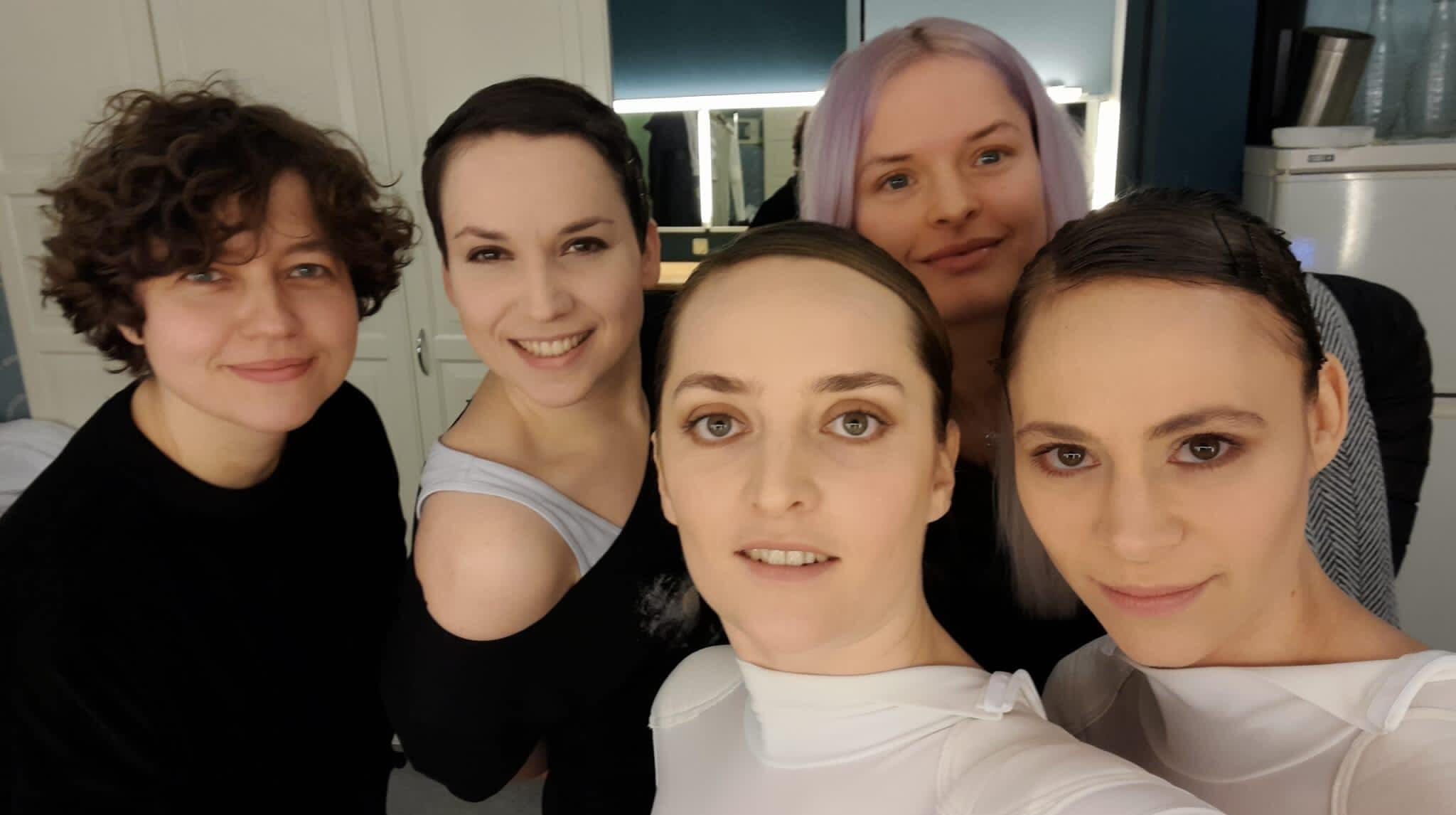
From Left: Marieluise Herrmann, Kristin Mente, Chiara Detscher, Constanze Friedel, Jule Oeft-Rottluff (2023)
Marieluise Herrmann
Musician, Dramaturg and Produktionsleitung Marieluise Herrmann founded Dresden’s everyone company in 2019 to present Moran’s work to audiences in Germany, often involving international collaborations. She has participated in many of the company’s productions as musician, actor, director of photography as well as dramaturg, production manager and photographer. Since 2019 everyone company has presented works in Germany at Hellerau, Schaubühne Lindenfels, Societaetstheater, At: Tension Festival, as well as Kitoki Arts Space (Serifos, Greece) including several international collaborations with artists such as Josh Spear (UK) and Joseph Keckler (US).

John Moran • Marieluise Herrmann
Kleiststr. 15, Dresden (DE) 01129[email protected]